
How does feeling hold a community together across generations, shifting economies, and changing identities?
Lectures delivered by Michael Amico
What Freedom Feels LIKe
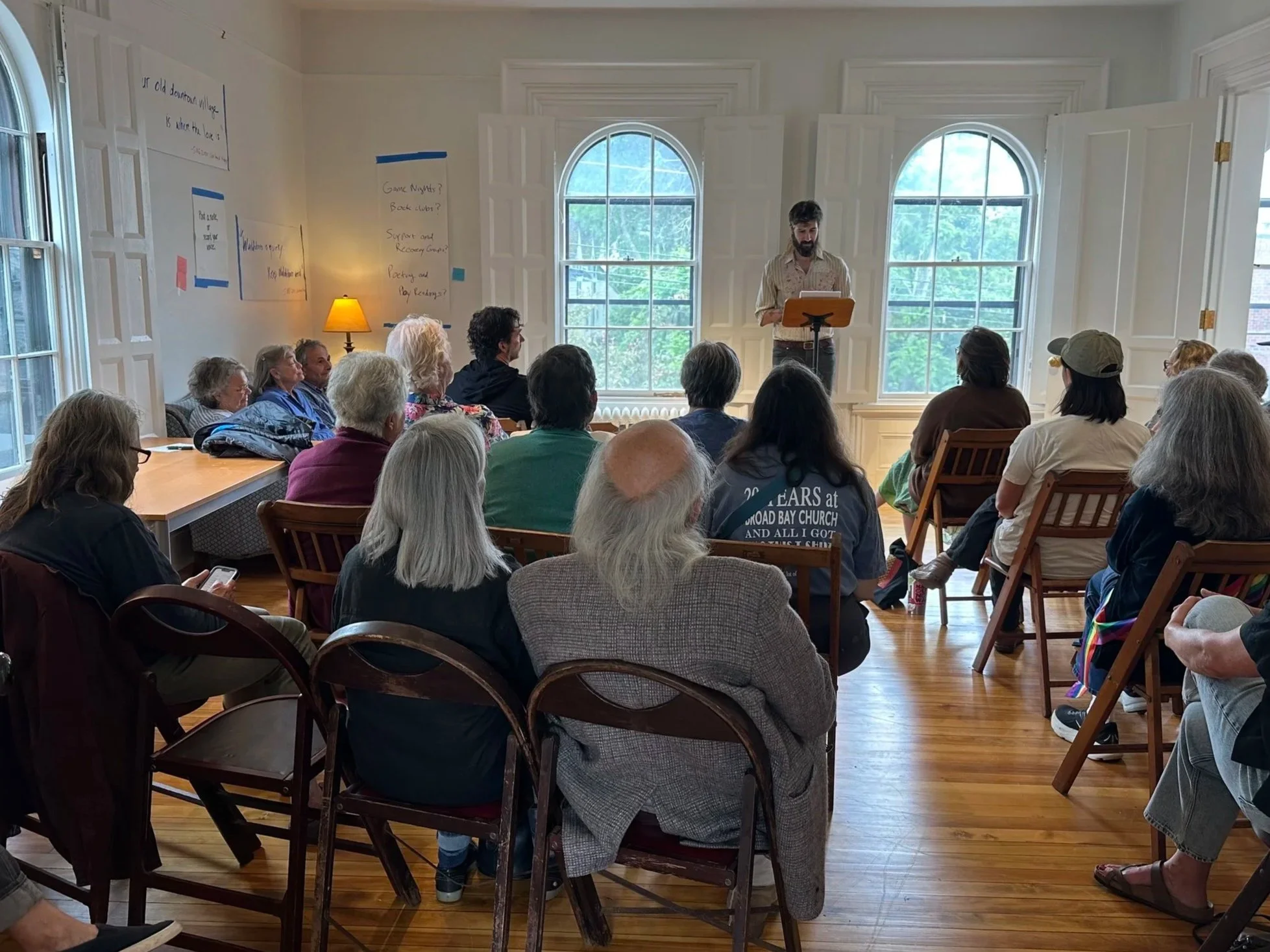
In connection with America’s 250th anniversary, this lecture asks what it has meant—and what it means now—to feel American and to feel free. It was read on July 4, 2026 on the upper level of Open House of History, surrounded by the voices and spirits of people who have lived and worked in the area over time.
Click here to read the full text.
Jasper Stahl’s emotional history of Waldoboro
This lecture and discussion is a culmination of the six-month Open House of History reading group on Jasper Stahl’s history of the town, featuring participants from the group. The event introduces emotional history as a way to bring the past alive within the present and deepen our understanding of community life.
Click here to read the full text.
The Art of Community: Architecture, Adaptation, and the Spirit of Civic Life
How do buildings—used, abandoned, or repurposed—reflect a town’s emotional life? In this lecture, Amico traces Waldoboro’s civic and cultural history through its architecture, revealing how everyday artistry and adaptive reuse have long helped hold the community together.
From the federal rigidity of the Custom House to the experimental, mixed-use designs of 19th-century buildings like Clark’s Hall and Sproul Block, both with performance halls, the talk maps the emotional terrain of Waldoboro’s built environment. We journey through Masonic lodges, Grange Halls, the Star Theatre, and the twentieth-century modernism of the Waldo Theatre, witnessing how a spirit of mutual aid created the emotional infrastructure of community calling out for a renewed built environment today.
Harriet Haskell: Waldoboro, Maine’s Pioneer in Women's Education and the Power of Same-Sex Love
Born in 1835, Harriet Haskell grew up surrounded by Waldoboro’s shipbuilders and powerbrokers and became something else entirely: a visionary educator who helped shape a national movement for women’s education.
In this lecture, Amico revisits Haskell’s remarkable life through the lens of same-sex love and feeling—particularly her 55-year partnership with Emily Gilmore Alden, who wrote the biography from which much of this story is drawn. More than a tale of local success, Haskell’s life exemplifies a queer sensibility that helped define the ethical shape of education in female seminaries. Her history reveals how women’s same-sex love formed the emotional backbone of a national movement for social reform rooted in care, justice, and purposeful living.